

You likely don’t need a whole new wardrobe. You need a system to decide what stays, what goes, and what is actually worth buying. A closet edit gets you there, and it’s a much smarter first step than simply the band-aid solution of “adding more to cart.”
A closet edit is also known as a closet cleanout or wardrobe declutter. This process is all about taking a closer look at the clothes you own, then figuring out what actually works for your current body and life. The end result is a wardrobe that’s more cohesive, functional, and true to your personal style. It’s not just about decluttering or having fewer clothes, but making better use of what you already have.
Why you feel like you have nothing to wear (even with a full closet)
If you stand in front of your closet and feel like nothing works, you’re not alone. It’s one of the most common things I hear when starting with new clients.
You probably own plenty of clothes. Maybe even some really great pieces. But you keep buying new things that look great on the model, yet never turn into an actual outfit. So it’s easy to land on “I need to buy more.”
Most of the time, the clothes are not the problem. It’s not realigning your closet with the latest version of you. In reality, life shifts …. a new role, a body that changes, different work to weekend activities, a different idea of how you want to show up. Oftentimes closets just never get the update, so you’re left with clothes that don’t work.
Why it’s so hard to let go of clothes you don’t wear
Almost every woman I work with says some version of these when she’s trying to let go of clothes but can’t:
It was expensive
It might fit again someday
I wore it to something important
It’s still “good”
Holding on is rarely about the item. It’s guilt, hope, or loyalty to a version of you that has moved on. That’s normal. It just means you need a better system to move your wardrobe forward. One that feels more like you while becoming more effortless and less overwhelming.
The four step wardrobe edit: how to decide what clothes to keep, donate, or replace
Pull EACH piece out and ask:
Does it fit the body I have today? Not the one from 15 pounds ago, and not the one you’re waiting for. If it only works “someday,” it isn’t working.
Does it feel like me right now? If you put it on and feel like you’re wearing someone else’s outfit, listen to that.
Does it work for my real life? Your actual week. Meetings, travel, dinners, errands, kids. Not an imaginary life with more occasions.
Does it connect to other things I own? A piece that works with at least three other items is a keeper. I call it “The Rule of Three.” A piece that needs one specific top and one specific shoe in reality just won’t get worn.
Yes to all four means keep it. If it fits and feels right but is worn out or the wrong size, replace it or get it tailored. A no to most of them means let it go.
This is how you find your gaps before you spend another dime. You might realize you’ve got a ton of great pieces but no basics to tie them together. Or your casual stuff is fantastic but your workwear needs a refresh. Notice the pattern of what’s working and what’s missing, and you’ll stop buying the same thing over and over.
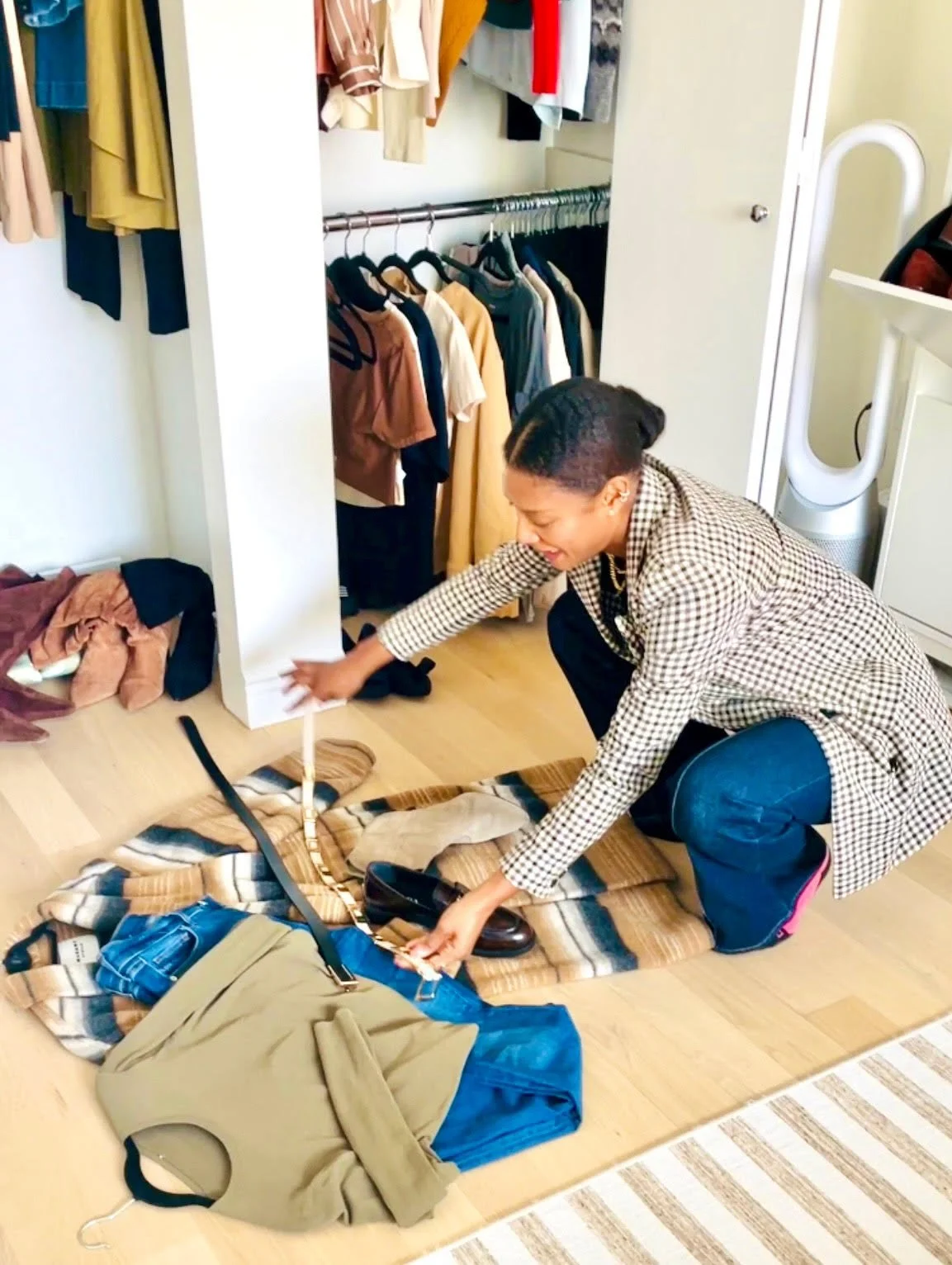
What happens during a closet edit with the right professional stylist?
A professional closet edit does more than sort clothes into keep and donate piles. It helps you understand how the pieces you already have work together, discover new outfits and combinations you might be overlooking, and figure out which new additions make the most sense for you.
A client I worked with recently in NYC had a full closet and a habit of wearing the same few things. She was holding on to a rack of blazers and tailored pants from a job she left four years ago because they were expensive. When we ran them through the four tests, she kept four and let go of the rest. What she actually needed was two great pairs of trousers and a modern feel blazer for the work she does now.
She did not need a new wardrobe. She needed permission and a good eye to know what to let go of and exactly what to add.
That’s the heart of the work I do through Elevated Style by Aliya. My job isn’t just sending you shopping links. It’s to help you see what’s already working in your closet and intentionally build from there, so you stop guessing and have a system for getting dressed with ease.
What to do with the clothes you're not ready to get rid of
Everyone ends up with a “maybe” pile. Here’s how to handle it:
Put the maybes in a bag or bin, out of your closet
Write today’s date on it
If you haven’t reached for anything in 90 days, let it go without opening it again
If you pulled something back out, it earned its spot
The goal isn’t getting rid of as much as possible. Think of decluttering as making room for what actually works, so you can build a closet that doesn’t feel overwhelming.
When to replace clothes and what to buy first
Once you’ve edited, the gaps get obvious. Resist the urge to fill them all at once. Start with the one piece that would make the most outfits work, like pants you’d wear a few times a week, or a jacket, or a shoe. Shop with a short intentional list and think about versatile pieces that work for multiple occasions. That’s how you stop buying pieces that never become real outfits, and just take up space in your closet with the tags still on.
Wardrobe decluttering FAQs
Do I have to get rid of everything that doesn’t fit?
No. If you love it and a tailor can make it work, keep it. If it only fits a version of you that’s not coming back, let it go.
How often should I edit my closet?
Twice a year, when the seasons change. It gets faster every time.
Can a closet edit be done online?
Yes. We can go through your closet together over a structured Zoom session. I work with women virtually all over the U.S.
What’s the difference between editing my own closet and a professional wardrobe edit?
When you do it yourself, you’re mostly deciding what to toss. With a professional wardrobe edit, someone with a trained eye helps you see what fits, what feels like you, and what actually works together. Then we figure out what’s missing, so you get more out of what you own and stop buying things that never become outfits.
Who actually hires a personal stylist?
Most people who hire a personal stylist aren’t celebrities. They’re busy professionals, often in the middle of a change like a new role, a shifting body, or a different stage of life, who are tired of guessing what to wear. Many already spend money on clothes but keep buying pieces that never turn into outfits. If that sounds like you, a closet edit helps you see what’s already working, put outfits together from what you own, and shop from a short list so every purchase has a purpose.
Ready for a professional closet edit?
If this sounded like your closet, you don’t have to sort it out alone. Take a look at my Closet Edit & Clean Out service, or book a free discovery call and we’ll talk about what’s going on and whether a closet edit is the right first step. No pressure, just a real conversation — book yours here.
Aliya Thomas is the founder of Elevated Style by Aliya, a personal stylist who helps professional women feel like themselves in their clothes again. She works with clients in person in NYC, Westchester, Connecticut, and North Jersey, and virtually anywhere in the U.S., with 20+ years in the fashion industry.